Home › Sump Pump Installation in Lancaster, PA › Sump Pump Installation in Mount Joy, PA
Sump Pump Installation in Mount Joy, PA
Sump pump installation in Mount Joy is the fitting of a pump in a basement pit that collects groundwater, so the pump can lift that water out and away from the house before it floods the floor. A sound installation is a system: the pit, the pump sized to the inflow, a check valve, a discharge line routed safely outside, and a plan for power cuts, when storms are at their worst. Call (607) 305-8020, describe the problem and your part of Mount Joy, and we connect you with an independent local plumber. You agree scope and price with the plumber directly before work starts.
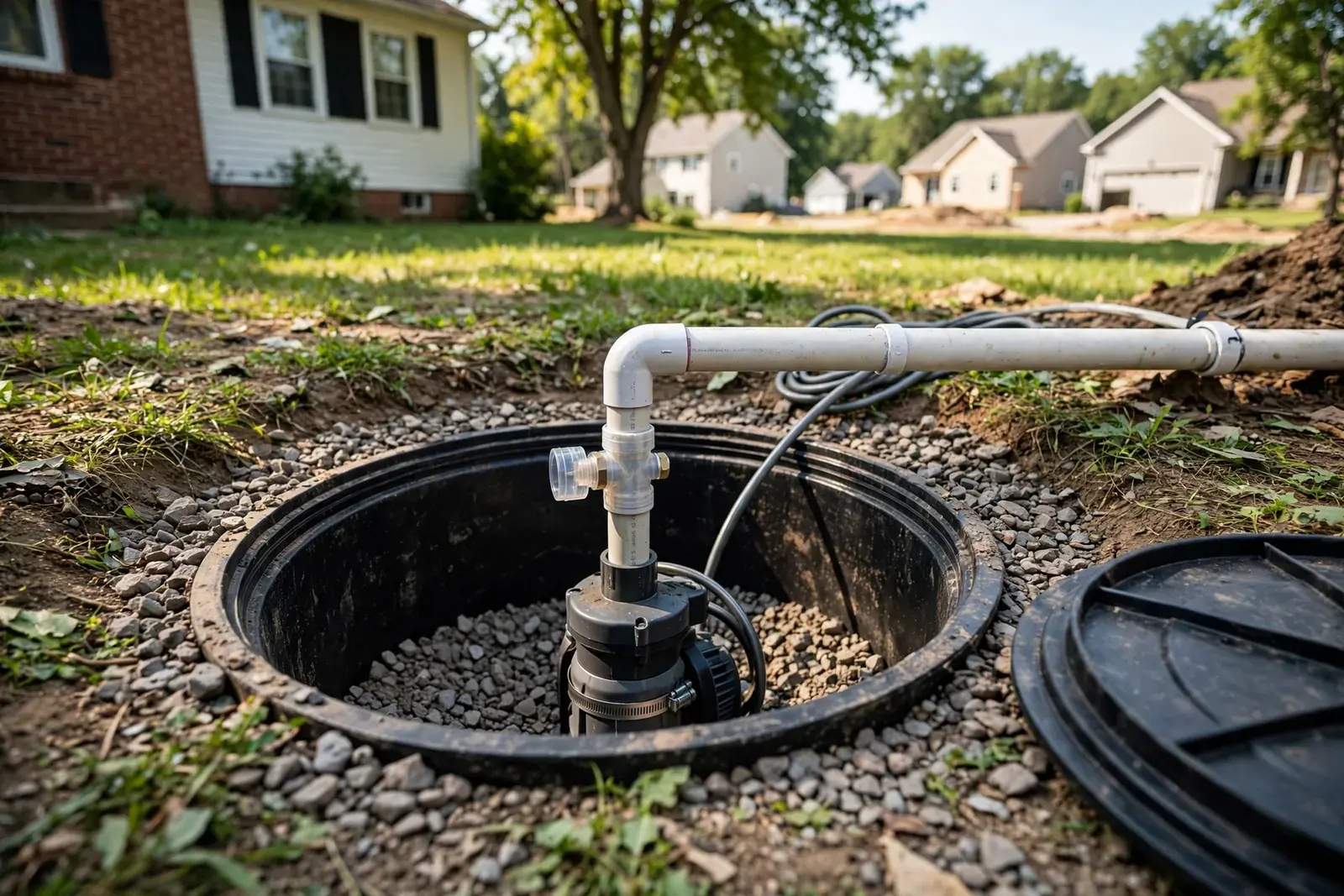
At a glance
What does sump pump installation do for a Mount Joy basement?
Sump pump installation means setting a pump in a pit at the low point of a basement or crawl space, so groundwater gathering beneath the floor is collected and discharged outside before it can rise through the slab. The pump does not stop water arriving. It gives that water a managed exit, on the house's terms, instead of letting it find its own way up through cracks and joints.
Few Mount Joy services are as tied to geography. Little Chiques Creek borders the east side of town, and the low streets near it, around Little Chiques Park and the Route 772 Cove Bridge, sit over a high water table that presses on basement floors after rain and during the spring thaw. Older centre borough homes were built before modern drainage habits, mid century Florin basements vary, and newer subdivisions toward Route 283 may have a pit roughed in but no pump fitted. If your basement shows tide lines or a pit that fills on its own, call (607) 305-8020. One call connects you with an independent local plumber who will size the system to how your ground actually behaves.
Pair the pump with an honest look at the water's journey before it reaches the pit. Gutters that discharge beside the foundation, soil that slopes toward the house and window wells that collect runoff all feed the same water table your pump then has to lift. On the streets near Little Chiques Park, where lots are level and the ground stays wet, correcting even one of those contributors can visibly reduce how often the pump runs. The plumber can advise which of them your house suffers from while the installation is being planned.
How can a homeowner tell a basement needs this protection?
A basement that needs a pump usually keeps giving the same evidence after wet weather. Watch for the recurring pattern:
The mechanism is pressure from below. Rain and melting snow charge the soil, the water table rises, and groundwater looks for the easiest release, which in a house near the creek can be the joint where floor meets wall, or an old crack in the slab. Finished basements suffer most quietly, because water travels under flooring before it shows. A home does not need to flood dramatically to justify a pump. Repeated low level intrusion does its own slow damage to finishes, stored belongings and the air quality of the whole house.
Noise and placement are household considerations, not afterthoughts. A pump cycles day and night in a wet season, and in a home where the basement holds a bedroom or a playroom, the pit's position and the lid's fit decide whether that cycling is a background murmur or a nightly announcement. Discuss it before the concrete is cut. Moving a planned pit by a few feet at the design stage is trivial. Moving it after installation is a second project.
How is a sump pump system fitted, from pit to discharge?
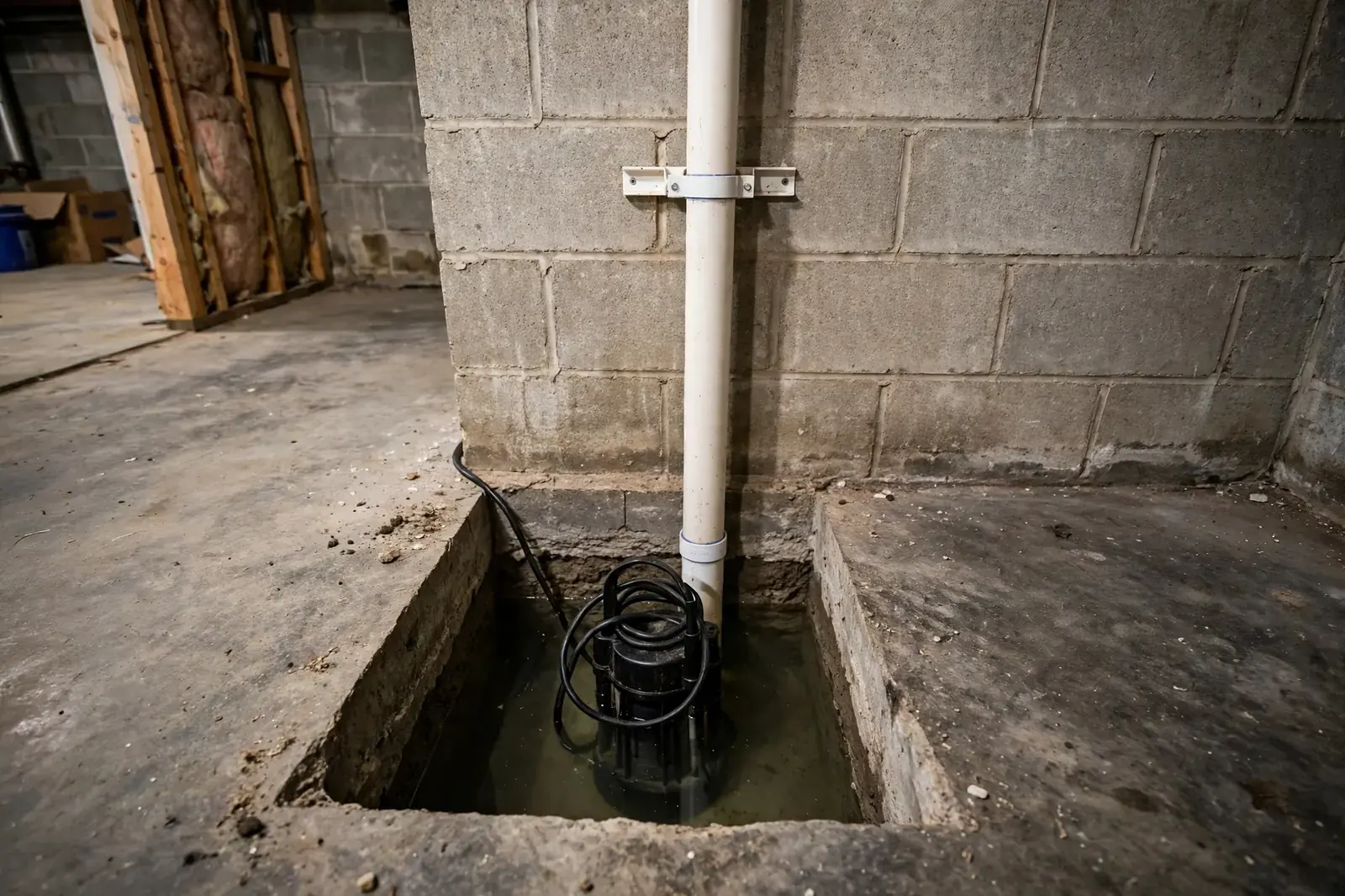
Installation starts with siting, because a pump in the wrong corner protects nothing. The plumber looks at where water actually enters, where the floor naturally falls, and where a discharge line can leave the building sensibly. In a home with an existing pit, that pit's position and depth are judged first. Where no pit exists, one is formed at the chosen low point, cutting the concrete and setting a liner that lets groundwater in while keeping the pit walls stable.
The pump is then set level in the pit, with its float able to travel the full arc. A check valve goes into the discharge line so water already pumped out cannot fall back and be pumped twice. The discharge is routed outside to a point where the water will drain away from the house rather than circle back to the foundation, which matters on the flat, wet lots near the creek. The finished system is tested by filling the pit and watching a full cycle, float lift, pump run and shutoff. Backup options for power cuts are worth discussing at this stage, particularly if your basement is finished or the water table at your street is lively.
Maintenance after installation is light but not optional. Once or twice a year, check that the pit is clear of debris, that the float swings without catching and that the pump runs a clean cycle when water is added. Pumps fail quietly in dry months, which is precisely when nobody tests them. A household on the creek side of Mount Joy that builds the test into the change of seasons will learn about a tired pump on a calm afternoon rather than during the storm that needed it.
What shapes the price of a sump pump installation?
The cost follows how much groundwork your basement needs and how hard your water pushes. The deciding factors are:
New pit or existing pit
Fitting a pump into a sound, correctly placed pit is contained work. Forming a new pit means cutting concrete, setting a liner and making the floor good.
How much water arrives
A pit that fills slowly in storms needs less capacity than one on the low creek side streets that refills as fast as it empties at the thaw.
Discharge route
A short run to a suitable outside point is simple. A longer route, or one that must avoid drives and paths, adds pipework and planning.
Power cut protection
Adding a battery backup system is further scope, and finished basements are where homeowners most often judge it worthwhile.
The plumber agrees the system specification and price with you before installation, and should explain what the chosen pump can handle in plain terms, so a storm night is not when you discover its limits.
Ask what the discharge does in winter. A line that leaves the house and ends where its water can freeze across the opening may block exactly when meltwater arrives, and the routing discussion should cover where the water lands in cold weather as well as in rain. Local experience matters here, because Mount Joy winters and the spring thaw arrive together, and a well planned discharge takes both seasons into account from the start.
Where else around Mount Joy can a sump pump be installed?
Sump pump installation through this service covers Mount Joy and its neighbouring towns. The Mount Joy, PA plumber page is the local starting point. The broader county picture is on the Sump Pump Installation in the greater Lancaster area page. For the related drainage work that often comes up in the same basement conversation, see Mount Joy drain cleaning. Call (607) 305-8020, describe your basement, its pit if it has one, and how the water behaves in wet weather, and you will be connected from there. Also served by the same route:
Homes just outside the borough with crawl spaces rather than full basements are also assessed through this route, and the system there is adapted to a shallower space and a different pattern of water entry.
How does Plumbing Lancaster PA work?
Plumbing Lancaster PA works in 3 steps: call, describe, connect. We are a connection service, not a plumbing company, so the plumber who arrives is a local independent tradesperson, not our employee.
Call one number
Dial (607) 305-8020 any time. The line covers Lancaster city and the whole county service area.
Tell us the problem
Say what is leaking, clogged or cold, and which town you are in. Urgent jobs get flagged urgent.
Get connected locally
We connect you with a local plumber who takes the job. You agree scope and price with the plumber directly.
Need this done in Lancaster, PA?
Call (607) 305-8020 and tell us the problem and your town. We connect you with an independent local plumber who takes the job, and you agree the scope and price with the plumber before any work starts.
Call (607) 305-8020Sump Pump Installation in Mount Joy: questions, answered
My basement has never flooded. Do I still need a pump?
Not necessarily. A basement that stays dry through heavy rain and the spring thaw may never justify one. The case builds from evidence, tide lines, a filling pit, damp arriving from the floor up, rather than from fear. On the low streets near Little Chiques Creek the evidence tends to appear, and a plumber can help you read it.
What does a check valve actually do in the system?
It sits in the discharge line and closes when the pump stops, so the water still in the pipe cannot run back into the pit. Without one, the same water gets lifted repeatedly, the pump cycles far more than it should, and its working life shortens. It is a small fitting with an outsized effect on the system.
What happens to my basement if the power fails in a storm?
A standard pump stops with the power, which is unfortunate timing because storms bring both water and outages together. A battery backup system keeps a secondary pump running through an outage. Whether it is worth adding depends on how finished the basement is and how lively the water table is at your part of Mount Joy.
Where should the discharge water go outside?
Away from the foundation, to ground that falls away from the house or to a suitable drainage point, so the water is not simply recycled into the soil beside the wall. On flat lots near the creek this takes thought, and the route is part of the installation design rather than an afterthought once the pump is in the pit.
How do I test a pump that is already fitted?
Pour water into the pit slowly and watch. The float should rise, the pump should start, empty the pit down to its shutoff level and stop cleanly without chattering or running dry. Do this before the wet season rather than during it. A pump in a Florin basement that has sat idle for years may fail this simple test.
Can a pump be added to a finished basement without ruining it?
Usually, with localised work. The pit is formed at a chosen low point, often in a utility area or a corner that can be accessed, and the concrete is made good around the liner. Floor finishes immediately around the pit need care, but the installation is a defined area of work, not a basement wide strip out.
Need sump pump installation in Mount Joy, PA?
Call (607) 305-8020 and describe the job and where you are in Mount Joy. We connect you with an independent local plumber, and you agree scope and price with them before work starts.