Home › Sump Pump Installation in Lancaster, PA › Sump Pump Installation in Willow Street, PA
Sump Pump Installation in Willow Street, PA
In Willow Street, PA, sump pump installation is the fitting of a pump in a pit at the low point of a basement, where groundwater collects, so the pump can lift it out through a discharge line before it floods the floor. You need it when a basement takes groundwater during heavy rain or snowmelt, when an old pump has failed or struggles, or when a finished basement needs protection it has never had. Call (607) 305-8020 and describe the problem, the room or line involved, and how your home is built. We connect you with an independent local plumber, and you agree the scope and price with that plumber before work starts.
At a glance
What does a sump pump do for a Willow Street home?
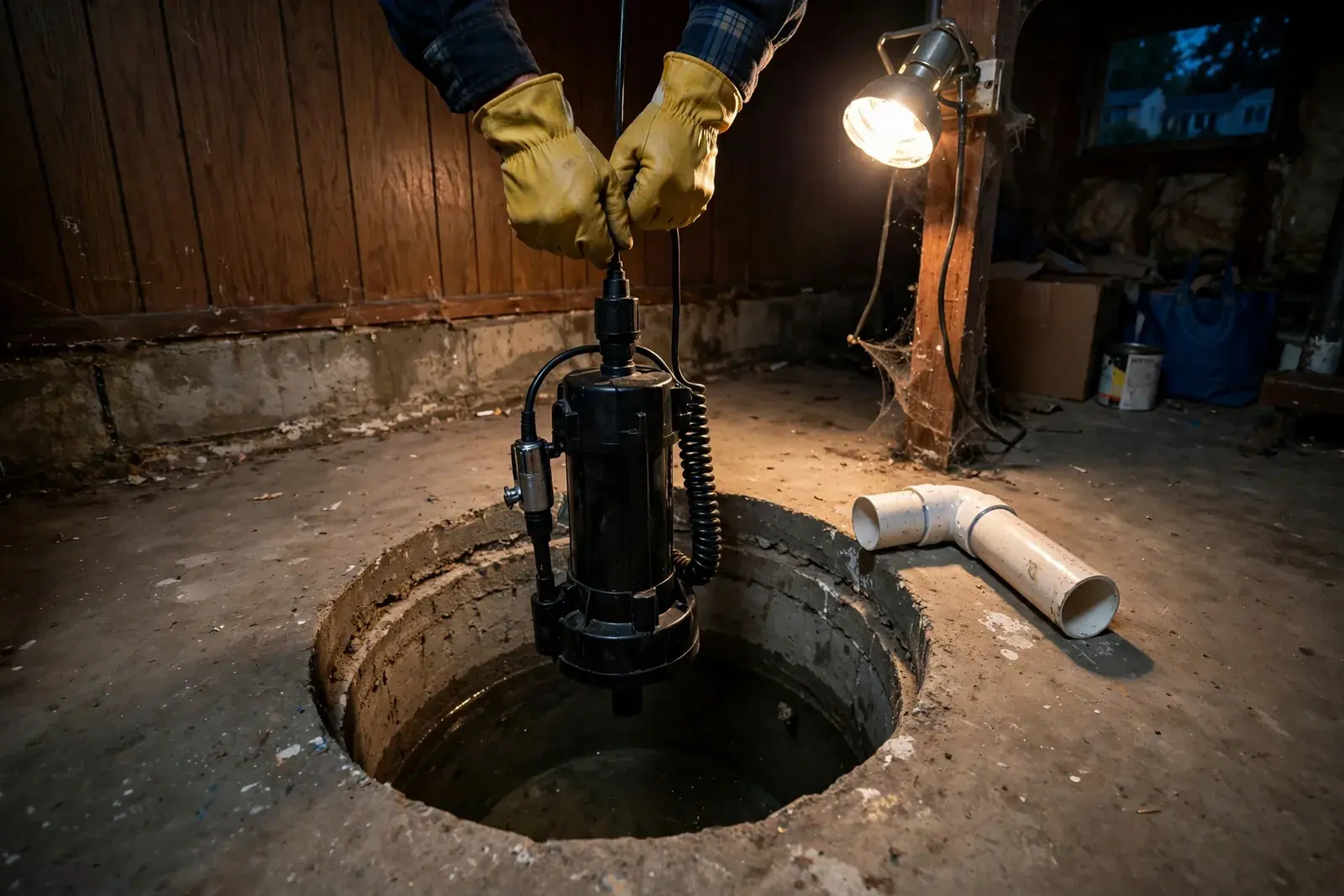
A sump pump sits in a pit at the lowest point of a basement, collects the groundwater that gathers there, and pumps it outside before it can rise through the floor. Installation means setting the pit, the pump and a discharge route that carries water clear of the foundations.
Willow Street's ground makes this a live question for many homes. The village, about five miles south of Lancaster city in West Lampeter and partly Pequea Township, spreads across farmland soils between the Amish farms, and many of its 1960s to 1990s subdivisions were built with basements that now hold finished rooms, heating systems and storage. Groundwater behaviour varies street by street off Beaver Valley Pike and Penn Grant Road: one colonial stays dry for decades while its neighbour's pit, if it has one, runs through every spring storm. A home with no pump at all is relying on the water table staying polite, which is a reliance Pennsylvania weather tests regularly. Installation converts that hope into a managed system.
Groundwater behaviour around Willow Street has a seasonal rhythm worth planning around. Pits that sit dry all summer can fill steadily through late winter and spring as the water table rises across the farmland soils, which is why assessments booked after a wet spell give the most honest picture. A pump chosen during a drought for a Beaver Valley Pike basement may meet a very different basement in March.
Does your Willow Street basement need a sump pump?
The case for a pump builds from what a basement does during wet weather: seepage at the floor edges, a pit that fills, or damp that never quite leaves. Finished basements raise the stakes of getting it wrong.
Willow Street owners often reach this decision after finishing a basement in a split-level or colonial and realising what is now at risk below the waterline: flooring, drywall, furniture and the furnace itself. Others inherit an ageing pump with a house purchase and learn its condition during the first heavy rain on Eshelman Mill Road. An existing pit with no pump, common in this building era, is practically an invitation to complete the job.
An ageing pump often telegraphs its decline before it quits. Cycling that grows more frequent, a float that sticks, a discharge that sounds strained, or rust flaking into the pit water all suggest a unit living on borrowed time. Replacing a pump on suspicion during a planned visit is almost always calmer than replacing it at midnight during the storm that finished it, a calculation many Willow Street households make after one close call.
How is a sump pump installed in a Willow Street home?
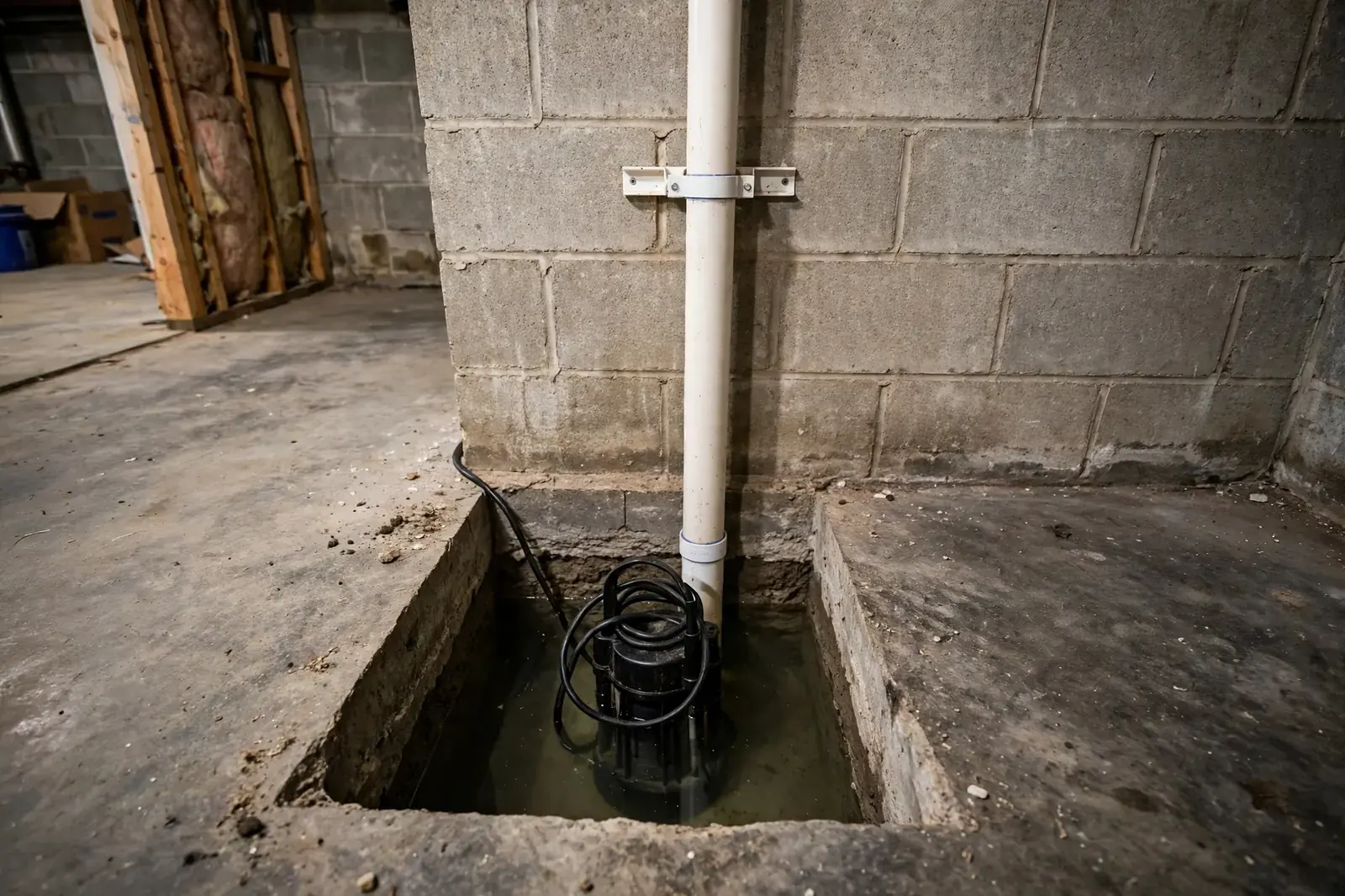
The plumber sets or prepares the pit, fits a pump sized to the inflow, connects a discharge line that exits away from the foundations, and tests the system by filling the pit. Check valves, a sealed cover and the float operation are all verified before the job is done.
Where no pit exists, cutting and digging one at the basement's low point forms part of the work, along with gravel bedding and a liner. The discharge route deserves thought on Willow Street lots: water should land far enough from the house that it does not simply return to the same ground, and it must not create a problem at a neighbour's boundary or across a shared drive. Battery backup is a serious option here rather than an extra, because the storms that fill pits fastest are the ones that cut power. At handover, the plumber should show you how to test the float and what the alarm, if fitted, is telling you.
Testing after installation is deliberately unglamorous and important. The pit is filled with water, the float rises, the pump clears the pit and the check valve holds the column from falling back, and that sequence is repeated so you can see it work rather than trust it. The plumber should also show you the manual test you can perform yourself every few months, which takes less than a minute and keeps the system honest.
What shapes the cost of sump pump installation in Willow Street?
Installation cost depends on whether the pit exists, the pump's capacity and where the discharge water has to go. The main factors in a Willow Street quote:
Pit already present or new
Fitting a pump into an existing pit is contained work. Cutting a new pit into a concrete floor adds labour and spoil removal.
Pump capacity and type
Pumps are sized to the inflow a basement actually gets, and pedestal and submersible designs differ in cost and behaviour.
Discharge routing
A short run to a nearby wall exit is simple. A long route to reach a suitable discharge point adds pipe and time.
Backup arrangements
Battery backup units and alarms protect the basement during power cuts, and including them changes the scope of the installation.
Ask what inflow the chosen pump is sized for and what happens in a power cut, because those two answers define how protected the basement really is. You agree the full scope and price with the independent plumber directly before installation.
Restoration and tidiness belong in the quote conversation too. A new pit involves concrete cutting and spoil, and the agreement should cover how the floor is made good and the area left. Similarly, if the discharge route crosses planting or a gravel drive on a Willow Street lot, ask how that surface will be reinstated, so the finished job looks as considered as the plumbing itself.
Where else around Willow Street is sump pump fitting available?
Sump pump fitting through this service is available across Willow Street and the neighbouring parts of southern Lancaster County. For local plumbing in general begin at the Willow Street, PA plumber page, for the county service see Sump Pump Installation across Lancaster, PA, and for unexplained basement water the Willow Street leak detection page may be the better first step. The same installation service in nearby towns:
From the subdivisions near Kendig Square to farm lanes on the Pequea Township side, arranging a fitting takes one call. Dial (607) 305-8020, describe your basement and its history with water, and the call connects you with an independent local plumber covering Willow Street.
Installation and replacement bookings cover the whole village, including homes that inherited pits without pumps in the older subdivisions, finished basements in the Lampeter-Strasburg district and properties toward Pequea Township where groundwater sits high near the farmland. Describing your basement's history with water, even in rough terms like dry, damp or flooded once, gives the plumber the right starting point.
How does Plumbing Lancaster PA work?
Plumbing Lancaster PA works in 3 steps: call, describe, connect. We are a connection service, not a plumbing company, so the plumber who arrives is a local independent tradesperson, not our employee.
Call one number
Dial (607) 305-8020 any time. The line covers Lancaster city and the whole county service area.
Tell us the problem
Say what is leaking, clogged or cold, and which town you are in. Urgent jobs get flagged urgent.
Get connected locally
We connect you with a local plumber who takes the job. You agree scope and price with the plumber directly.
Need this done in Lancaster, PA?
Call (607) 305-8020 and tell us the problem and your town. We connect you with an independent local plumber who takes the job, and you agree the scope and price with the plumber before any work starts.
Call (607) 305-8020Sump Pump Installation questions for Willow Street homeowners, answered
How do I know what size sump pump my Willow Street basement needs?
Sizing follows the inflow, meaning how quickly water enters the pit during wet weather, and the height the pump must lift it to discharge. A plumber judges it from your pit's behaviour in storms and the basement's history. Oversized pumps cycle wastefully and undersized ones fall behind at the worst moment, so the conversation is worth having rather than matching whatever unit was there before.
My Willow Street home has a pit but no pump. Is that normal?
Yes, it is common in subdivisions built here in the 1970s and 1980s, where builders formed pits during construction and left the pump as a later decision that nobody took. The pit's presence makes installation simpler, since the excavation is done. If the pit has stayed dry for years, a modest pump still converts luck into protection, particularly once a basement is finished.
What happens to my basement if the power goes out during a storm?
A standard pump stops with the power, which is precisely when heavy rain may be filling the pit. Battery backup pumps exist for exactly this gap and are a common choice in Willow Street homes with finished basements off Penn Grant Road. Water powered backups suit some public water homes. Ask the plumber which options fit your setup when the installation is quoted.
Where should sump pump water discharge on a Willow Street lot?
It should land well away from the foundations, on ground that slopes away from the house, so the same water does not percolate straight back to the basement. It should not discharge onto a neighbour's property or across walkways where it can freeze in winter. The plumber will look at your lot's fall and suggest a route, which is part of planning the installation properly.
How long does a sump pump usually last in Willow Street?
Pumps are working machines in damp pits, and a service life measured in years rather than decades is normal, shortened by frequent cycling in wet ground. Signs of age include noise, rust, slow starting and running without moving much water. If your Willow Street pump came with the house and its age is unknown, having it assessed before the spring rains is a cheap precaution.
Who installs the pump when I arrange it through this site?
An independent local plumber covering Willow Street carries out the installation and agrees the price with you directly. This website is a connection service, not an installer. One call to (607) 305-8020 describing your basement and whether a pit exists connects you with the plumber who will size, quote and fit the pump.
Need sump pump installation help in Willow Street?
Call (607) 305-8020 and describe the problem once. We connect you with an independent local plumber, and you agree the scope and price before work starts.